Category: Investment

  • WPMU DEV Hosting Review: A Comprehensive Look at Performance, Features, and Support

    WPMU DEV Hosting Review: A Comprehensive Look at Performance, Features, and Support

    In the ever-expanding universe of WordPress solutions, WPMU DEV has carved out a name for itself by offering a plethora of tools and plugins to enhance the performance and management of WordPress sites.

    But with the evolution of their services, WPMU DEV has embraced a new frontier—fully managed hosting. In this WPMU DEV hosting review, we delve deep to discover whether this hosting platform is the game-changer your WordPress site needs in 2023.

    WPMU DEV: A Brief Introduction
    WPMU Dev Hosting

    WPMU DEV is part of Incsub—the parent company behind other WordPress stalwarts like CampusPress and Edublogs—securely positioning itself as an experienced player in the digital arena. What makes WPMU DEV stand out is its hands-on approach to providing an integrated ecosystem for websites, boasting a selection of premium services, themes, and plugins. Aimed at freelancers, agencies, and entrepreneurs, their hosting packages promise dedicated resources and top-tier performance.

    Here’s what you will find in WPMU Dev hosting plans:

    • Location Flexibility: Choose from a diverse selection of 18 data center locations for hosting your site, with options including various regions in the United States (both east and west coast), the United Kingdom, Germany, Singapore, among others to optimize for your target audience.
    • Enhanced Security: Benefit from robust security measures with WPMU DEV’s in-house services like Defender and Automate that offer file scanning, an advanced firewall, and the added security of two-factor authentication.
    • Optimized Speed: Experience lightning-fast hosting thanks to the integration of WPMU DEV’s wide array of services and tools, such as object and page caching, alongside the latest in technology with IPv6 and CDN (Content Delivery Network) support.
    • Reliable Backups: Gain peace of mind with automatic incremental nightly backups and the convenience of a one-click restore feature to safeguard your site’s data.
    • Effortless Staging: Take advantage of a dedicated staging environment to test and modify your site before pushing changes live with the simple click of a button.
    • Seamless Migration: Transition your site smoothly to WPMU DEV hosting using the platform’s automated migration tools, or have the support team conduct the migration for you at no extra charge.
    • Complimentary SSL Certificate: Secure your hosted sites out-of-the-box with a free SSL certificate provided through Let’s Encrypt, ensuring visitors’ connections to your site are encrypted.

    But are they the right fit for you? Let’s find out.

    The Hosting Experience with WPMU DEV

    Choosing the right WordPress hosting service can hugely impact site performance—and ultimately, your bottom line. WPMU DEV is offering a fully managed VPS hosting solution that promises to elevate your website’s performance by providing isolated resources for each website. But what do these promises translate to in real-world applications? We put WPMU DEV to the test using industry-standard tools like Pingdom and K6 to monitor performance metrics that matter.

    Testing the Performance

    Our Pingdom tests returned varying load times, heavily influenced by the location of the test servers. Load times are indeed crucial, but WPMU DEV’s feature that allows you to choose a server location tailored to your target audience means you can minimize these disparities. For more globally balanced performance, setting up a CDN with WPMU DEV could be beneficial.

    We initiated our website’s performance evaluation using five diverse Pingdom test servers located around the world. The loading speeds for our sample website from each location were as follows:

    • Washington D.C.: 0.677 seconds
    • San Francisco: 1.01 seconds
    • London: 0.241 seconds
    • Sydney: 1.98 seconds
    • Tokyo: 1.64 seconds

    These figures reflect tests conducted with the default Twenty Twenty theme of WordPress.

    Observing the data, it’s evident that while the website loads reasonably quickly, the loading times demonstrate significant variation in relation to the geographical position of each server.
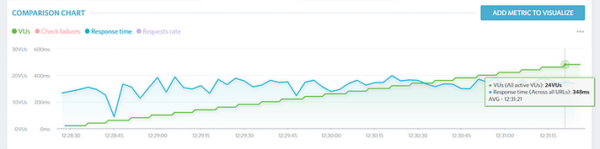
    K6 test on WPMU Dev hosting

    Our second evaluation involved conducting a load impact assessment, which entails emulating the behavior of 25 concurrent visitors on your website over a span of three minutes to observe any fluctuations in load times. The outcomes were quite remarkable.

    In our WPMU DEV Hosting Load Impact Review, it’s evident that even though there was a minor increase in response time (depicted by the blue line), the scenario with 24 virtual users active on the site (indicated by the green line) resulted in a load time of merely 348 milliseconds.

    Hence, if your venture involves running a modest-sized blog or commercial site on WPMU DEV hosting, you can be confident that increases in visitor traffic will not compromise your website’s load times.

    Seamless Integration and User Experience
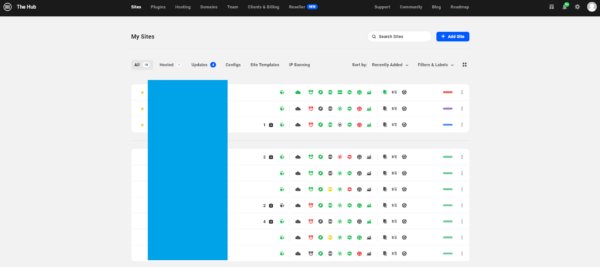
    Managing multiple sites using WPMU Dev client hub

    True to its ethos, WPMU DEV doesn’t just stop at hosting. It extends its interface—aptly named the Hub—for a comprehensive management experience. From site setup to activating various plugins and monitoring analytics, the Hub centralizes all operations in a user-friendly dashboard.

    The question remains: does this integrated approach truly streamline the process for users from various backgrounds? Our experiences suggest a resounding yes; the processes are streamlined, and even WordPress novices can navigate the interface with ease.

    Complementing Your Site with Pre-installed Tools

    Upon setup, your WordPress dashboard will greet you with pre-installed WPMU DEV plugins, spanning across essential categories like security, optimization, and marketing. This preemptive measure ensures you’re equipped to tackle various aspects of site management right from the start, potentially saving valuable time and effort.

    Support: WPMU DEV’s Safety Net
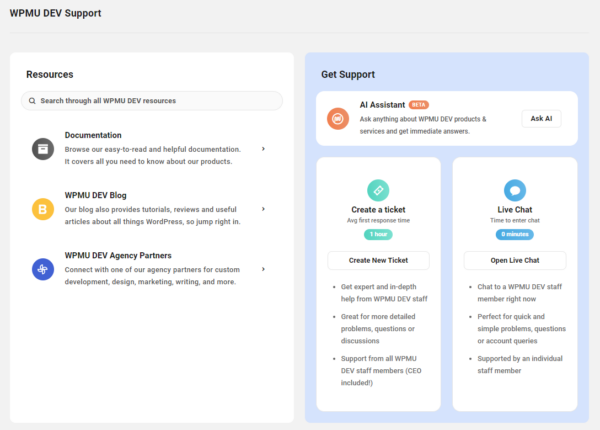
    Live chat support for WP MU Dev customers

    Beyond infrastructure and user interfaces, the soul of a hosting service often lies in its support system. WPMU DEV’s customer support includes not just a vast knowledge base but also dedicated support channels. Available membership packages provide various levels of access to these resources, allowing you to tailor your support experience to your specific needs.

    Pricing and Plans
    WPMU Dev hosting plans

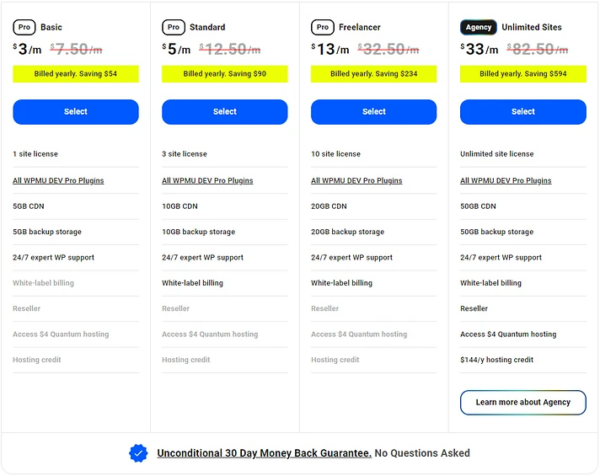
    WPMU DEV offers a variety of membership options tailored to different needs.

    • Agency Membership: For $33 monthly (Black Friday Cyber Monday deal only), enjoy the privilege of using all WPMU DEV services and plugins across an unlimited number of websites. Additionally, this plan includes a $144 credit that can be applied to any hosting package.
    • Freelancer Membership: At a cost of $13 every month, this package allows the management of up to 10 websites and provides full access to the complete suite of plugins.
    • Standard Membership: Priced at $5 per month, this option permits the setup of up to 3 websites while granting unrestricted access to all available plugins.
    • Basic Membership: For an economical $3 monthly fee, this plan enables you to establish a single website and also ensures access to the full range of WPMU DEV plugins.

    WPMU DEV acknowledges the diverse needs of WordPress sites by offering nine distinct hosting plans, each with varied resources and options.
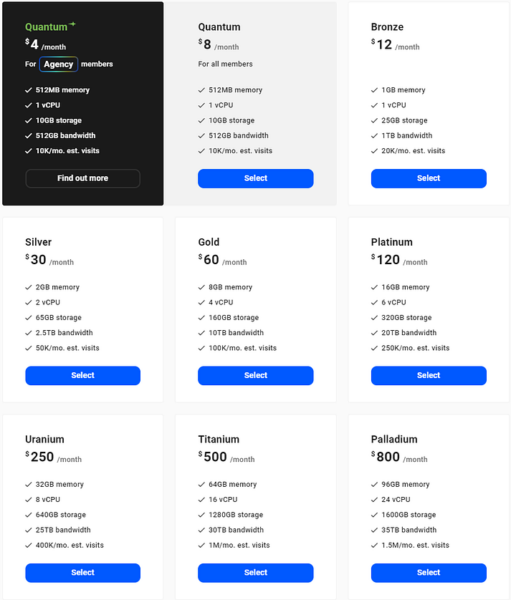
    WPMU dev hosting pricing

    Whether you manage a single site or a sprawling network, there’s likely a plan to match your requirements. A 30-day free trial sweetens the deal, granting you the freedom to evaluate their services without initial financial commitment.

    WPMU DEV versus The Competition

    While WPMU DEV’s all-in-one model presents a compelling proposition, it’s not without alternatives in the market. If you find yourself still on the fence, exploring other managed WordPress hosting services, such as those boasting lower price tags but still robust offerings, could be a beneficial exercise.

    Final Thoughts: Is WPMU DEV the Right Choice for Your Website?

    The hosting world is a battleground of promises, and WPMU DEV certainly makes some bold ones. With impressive performance test results, a user-friendly management dashboard, an array of plugins, and unwavering support, WPMU DEV positions itself as a premium, all-encompassing WordPress hosting solution.

    Sites ranging from small blogs to business behemoths could find a home with WPMU DEV, assuming the pricing aligns with their budget. And with the option to trial the service free for 30 days, making an informed decision has never been easier.

    We hope this deep dive gives you clarity on whether WPMU DEV is the hosting hero your WordPress site has been waiting for. Remember, the digital landscape is always evolving—stay informed, choose wisely, and may your site’s performance soar.

    Is WPMU DEV the right hosting service for your WordPress site? Let us know your thoughts, questions, or experiences in the comments below. And for those still seeking, continue your journey with our collection of the best managed WordPress hosting services available today.

    Have more inquiries regarding WPMU DEV? Whether it’s their legitimacy, offerings, or comparisons with other hosting providers, don’t hesitate to reach out. Your perfect hosting match awaits—and we’re here to help you find it.


  • How can students save money easily?

    How can students save money easily?

    Your expenses will be higher if you are living in a different place from your home and have no support from your family. You cannot afford to spend extravagantly. Therefore, you must stick to a budget in order to avoid falling into a debt cycle.

    We have listed a few tips to help you become more financially responsible.

    1. Rent Textbooks

    One of your biggest expenses as a student is textbooks. Renting used textbooks and returning them at the end of the semester can help you drastically cut down on this cost. Rent the most recent edition of the book to ensure the syllabus is the same. You can make money by selling books you bought in the previous semester.

    2. Prepare Meals

    Fast food is expensive and unhealthy (yet tasty). Preparing your meals ahead of time will save you time and money. Spending money on coffee at Starbucks can add up to be a significant expense. Make your own coffee instead.

    3. Search for off-campus housing


    Rent is a major expense for a monthly budget, so it’s important to plan ahead. Staying on campus can be expensive, even though it may seem like the best option. Students often look for affordable housing options outside of campus and rent apartments in different neighborhoods. Usually, it is much cheaper and you can live a few streets away.

    4. Join the Student-Run Facebook Group

    Students run a number of Facebook groups that provide a wealth of information on great deals for books, technology and housing. Students will post to find a student selling their books or a roommate. You may find that many of these deals are beneficial for you. Also, you’ll be kept informed about campus events.

    5. Do not ignore your university emails

    You may ignore University emails because you consider them to be spam. However, these emails can provide you with a wealth of information about current events. You will receive an email every week with information about campus events that offer free food. So do not skip these emails.

    6. Students Discounts

    You will receive discounts in movie theaters as a student. Gas stations offer students significant discounts. Bring your student ID with you when buying food from the campus center. They will deduct the sales tax.

    7. Visit the University Gym


    there is no need to look for the best option off-campus, You can use the fitness center on campus for free or very reasonably if you’re into it. Ask your student center or PE teacher about visiting hours and terms.

    The Bottom Line

    Saving money as a student and staying within your budget is only possible when you are able to control the urge to buy unnecessary items. Also, you can find the writer’s work at https://us.dissertationteam.com/do-my-coursework – it will help you both with money and studying!

  • Artificial Intelligence Impact on Sports Betting

    Artificial Intelligence Impact on Sports Betting

    AI technology is revolutionary, to say the least. In addition to taking over mundane human activities, AI allows us to make accurate predictions, identify patterns, and process large pockets of data. In sports betting, these applications are fast transforming how sports fans and bettors engage with sports wagers, live games, and betting odds. Here is a closer look at the impact of AI on sports betting.

    More Efficient, More Accurate Odds

    The primary goal of sport betting platforms like Betway is to provide bettors with well-calculated odds. Bookmakers are taxed with maintaining a proper risk-to-reward balance and delivering timely and accurate predictions. With AI, these predictions are getting more accurate and efficient. AI algorithms can be trained to analyze real-time and historical data to assess variables such as head-to-head stats, weather conditions, management changes, and player injuries. With such in-depth analysis, AI models can produce more precise odds and predictions.

    Fraud Detection and Reduction

    Like traditional sports, sports betting is constantly threatened by match-fixing, insider trading, and other forms of fraud. AI has proven effective in detecting and reducing such activity through data analysis and machine learning. AI models collect and analyze large pockets of data. They can create predictive profiles based on historical betting behavior, social media sentiment, and player performance to help define “normal” betting behavior. From these profiles, AI algorithms can be trained to identify suspicious and abnormal online behavior that may indicate fraud. They can then alert sportsbooks to take action before unscrupulous parties exploit their platforms.

    Automated Betting

    Machine learning has helped automate the sports betting process. AI bots trained on numerous data points and behaviors can now take over betting and make informed predictive decisions for a bettor. As with most automated systems, all the bettor would have to do is press a button. This saves a lot of time, eliminating the need for bettors to constantly monitor the odds, follow live games, read emerging news, and more. AI software also eliminates human bias and emotion from betting, focusing instead on predetermined betting strategies and data analysis.

    Immersive Gambling

    AI also makes sports betting more immersive by providing more in-game and live betting options. AI models can be trained to update betting odds constantly and in real-time as events around a match or league unfold. Through changing odds, bettors can change their bets throughout the game and place wagers on different events as the game continues. This creates a more dynamic and immersive experience.

    Real-Time Gambling

    In line with constantly updated odds, AI is powering real-time gambling. Automated data processing and scraping techniques are primed for rapid analysis of crucial data, which eliminates the time lag between when an event occurs and when odds are adjusted. These faster calculations allow bettors to respond to game events in real time, increasing betting agility and competitiveness. 

    Personalized Experiences

    AI, through machine learning and predictive analysis, has also enabled bookmakers to personalize sports betting experiences. Algorithms analyze and collect data about betting patterns, histories, and preferences, allowing sportsbooks to make personalized recommendations for bettors.

    Wrapping Up: Beyond Efficiency

    It is clear that AI is helping improve the betting experience. Through AI, sportsbooks can detect and prevent fraud, leveling the playing field for avid bettors. It also improves online security, raises the chances of betting success, personalizes the betting experience, and provides bettors with valuable insights into games in real-time. As the technology evolves, it will continue to change how sports betting works, improving things for both bettors and sportsbooks even further.

  • How to Make Money from the Forex Market: Essential Tips

    How to Make Money from the Forex Market: Essential Tips

    You may not know it, but the foreign exchange (aka forex) market is the largest, most liquid market in the world. That’s right, and it’s not the stock market, nor is it the previously fabled crypto market… It’s the market where people go to buy and sell different currencies! For traders, this sheer size presents unique opportunities to potentially profit from the general fluctuations that currencies experience on a regular basis. However, its decentralized nature and the fact that traders can happen so rapidly can also pose risks for the unprepared. This article provides some vital tips for the uninitiated among you on how to start your forex journey and ensure that you can not only make money but do so consistently. We will cover everything the budding forex trader needs to know, from choosing the right broker to learning why it’s so critical to understand the different styles of trading and analysis.

    Realize The Significance Of Selecting A Reliable Broker

    Regardless of what or how you trade, you need a broker to facilitate your orders. However, in a world filled with misinformation in the pursuit of money, some brokers might not be as reputable as you first think. One way of choosing a brokerage firm is by checking online reviews. While many reviewers will use affiliate programs when promoting options, they have a vested interest in promoting the very best because the more money you make, the more they will. According to one top broker, roboforex.com, their affiliate program offers significant rewards the more you invest. Moreover, once you become a successful trader yourself, you can use these platforms as an additional source of income. 

    Nonetheless, the idea is to select a firm that you believe you can trust and that has been recommended by experienced traders. This includes checking their customer support (the more options you have, the better) and how straightforward it is to sign up, deposit, and withdraw your money. Aside from these factors, you should ensure they include a comprehensive knowledge base and offer a demonstration account (more on that later).

    Start With Thorough Education First (Especially With Regard To Analysis)

    You can’t hope to make money in this game without having a cursory understanding of how it works and how to analyze different pairings etc. Although many new traders are eager to jump into the fray and start making real spending money and are lured by the stories they often hear on social media et al., it is strongly advised by almost any serious trader to gain a robust educational foundation. Analysis refers to techniques that traders use to predict future price movements based on historical data. The two primary options you have are:

    1. Technical: This option aims to identify trading opportunities by analyzing statistical trends gathered from activities such as movement and volume. This is what you often see when you observe traders sing charts like candlestick graphs etc.
    2. Fundamental: This form of analysis involves assessing economic factors like interest rates, employment, and GPD data that can influence supply and demand for specific currencies.

    Both are vital to understanding if you want to make it big and without them, you are simply spinning your wheels and waiting for luck (luck being the antithesis of trading).

    Use A Demo Trading Account Before Using Real Money

    Before you dip your toes into the tempestuous trading waters of real life, most experts advise beginning in the kiddie’s pool! This isn’t to patronize but rather to help you become au fait with strategies, trading mechanics, etc. You don’t become a driver without practicing first. A demo account allows aspiring traders to practice using trading platforms and applying analysis techniques in a virtual marketer environment. In particular, demo trading enables traders to refine and gain confidence in their analysis methods before risking capital. You can evaluate what works versus what doesn’t without financial consequences. Nevertheless, while you won’t actually lose any money, you should approach demo trading like the real thing. That way, by the time you go live, you’ll have developed solid analytical skills to trade confidently and effectively.

    Create And Stick To A Strategy

    This tip loosely follows from the previous one in that you can use your time in the demo account to forge new tactics and strategies you might want to couture when you move onto real money. A sound forex strategy lays out entry and exit points, position sizing, risk management, and more. They remove emotion from proceedings by systematizing the when, how, and why of trades based on parameters and patterns. Adhering to these self-imposed rules boosts discipline and consistency, both of which are fundamental to proper trading practice. Additionally, sticking to a chosen stratagem enables more accessible analysis and refinement, further enhancing your ability to make money. Rigorously tracking trades against a strategy allows you to evaluate what’s working versus what’s not. Instead of randomly placing trades, beginners can use traded results to methodically improve their process over time.

    Keep An Eye On The News And Events That Could Cause Fluctuations

    Staying up to date with currency events isn’t just a useful thing to do; it’s completely and utterly integral to forex trading. The issue that most beginners face is placing too much weight on charts and technical signals. While these are undoubtedly important, as discussed previously, in order to be a better trader, you need a more well-rounded overview of the market. Global news affects supply and demand for currencies, impacting pricing. Key data like interest rate changes (particularly relevant these days) and unemployment numbers must be on every trader’s radar when they execute their trades. Nevertheless, the interplay between following news flow and events and comparing them to the charts will create a winning formula enabling almost any trader to capitalize and come out on top.

    Use Stop-Loss Orders Wisely

    The fabled stop-loss is perhaps the most vital component of a trader’s toolbox, enabling them to avoid losses that could wipe them out. Stop-loss orders close out positions once the price drops to a predefined level. Essentially, they control the downside of every trade, so you don’t lose out. However, you need to find a delicate balance and avoid placing stops too close to avoid getting stopped out prematurely. Once you have a few trades under your belt, this should become second nature. Nonetheless, always remember the mantra not to be too greedy and always remember the reason you are trading.

    Forex is a great market, and even beginners can make some decent money when they understand the game. However, understanding is the first part of the puzzle and one part you must spend a lot of time on before jumping into the deep end. With the tips presented here, you should be able to start trading effectively, make money, and limit the downsides.

  • What to do Before Buying a Home in Texas

    What to do Before Buying a Home in Texas

    Purchasing a house in Texas is both a monumental life event and a substantial financial investment. To ensure a successful home-buying experience, it’s essential to plan meticulously, conduct extensive research, and understand your financial capabilities. Here are some things to keep in mind before making your investment.

    Assess Your Financial Situation

    Before embarking on the home-buying journey, evaluate your financial health. Examine your income stability, credit score, savings, outstanding debts, and monthly expenses to determine your readiness to buy a house. All of these factors will help to determine your eligibility for loans. Shop around with different loan types, keeping in mind the limits for conventional loans in Texas. You might find, depending on the properties that you’re looking at, that you need to apply for a jumbo loan from District Lending instead.

    Set Realistic Financial Goals

    Determine your short-term and long-term financial goals related to homeownership. Consider factors such as how long you plan to stay in the house, potential changes in your family size, and future financial needs. Additionally, establishing an emergency fund is crucial, as unexpected expenses may arise. Align your home-buying plans with these goals to ensure a successful investment.

    Determine Your Budget

    Create a realistic budget for purchasing a home, taking into account factors such as income, down payment, closing costs, insurance, taxes, and maintenance expenses. Keep in mind potential interest rate fluctuations and other economic factors that may impact your budget in the long run.

    Understand the Additional Costs

    Homeownership involves more than just a mortgage payment. Consider property taxes, homeowner’s insurance, utilities, and maintenance costs when determining your budget. Additionally, account for one-time expenses like moving costs, furniture purchases, and possible renovation expenses.

    Improve Your Credit Score

    A good credit score increases your chances of securing a mortgage with a favorable interest rate. Review your credit report for any errors and work on improving your credit by paying down debts, making timely payments, and avoiding new credit inquiries.

    Get Pre-Approved for a Mortgage

    Obtaining a mortgage pre-approval from a reputable lender is a crucial step in the home-buying process. It provides a clear understanding of your borrowing capacity and demonstrates your seriousness as a buyer to sellers.

    Create a Wishlist and Establish Priorities

    Identify your preferences and priorities in a potential home, such as location, size, layout, and amenities. Distinguish between wants and “must-haves” to help you make well-informed decisions when searching for properties within your budget.

    Conduct Thorough Research on the Housing Market and Neighborhoods

    Analyze the current housing market conditions and neighborhood trends to make informed choices. Familiarize yourself with average prices, property types, and the pros and cons of various areas. Investigate factors such as school districts, crime rates, transportation options, and nearby amenities to find a community that suits your needs.

    Hire a Professional Real Estate Agent

    An experienced real estate agent can guide you through the complexities of the home-buying process, provide valuable insights, negotiate on your behalf, and help you make informed decisions. Choose an agent with local expertise and a proven track record in your desired area.

    Attend Open Houses and Schedule Private Viewings

    Visit open houses and schedule private viewings to get a feel for different properties, their layouts, and conditions. Take notes and photos to help you remember and compare homes as you continue your search.

    Network with Other Homebuyers and Professionals

    Connecting with other homebuyers and professionals in the industry can provide valuable insights, tips, and recommendations. Attend local home-buying seminars, join online forums, or participate in community events to expand your network.

    Inspect Potential Homes

    A thorough inspection of a potential home is essential to detect any structural issues, pest infestations, or other problems that could lead to costly repairs later on. Hire a professional home inspector to evaluate the property and provide a detailed report.

    Make a Strategic Offer

    Collaborate with your real estate agent to develop a competitive offer based on comparable properties, market conditions, and the seller’s situation. Be prepared for counteroffers and negotiations to secure the best possible deal. Include contingencies in your offer, such as financing and inspection, to protect yourself during the process.

    Secure Financing

    Once your offer is accepted, finalize your mortgage application and lock in your interest rate. Ensure you have all necessary documents and meet all requirements to avoid delays in the closing process.

    Prepare for Closing

    As the closing date approaches, gather all required paperwork, organize your finances, and stay in close communication with your real estate agent, mortgage lender, and other professionals involved in the transaction. Complete any final requirements, such as obtaining homeowner’s insurance and transferring utilities.

    Close the Deal

    Before closing, conduct a final walk-through to confirm that the property is in the agreed-upon condition. Review and sign all necessary paperwork, pay your downpayment and closing costs, and obtain the keys to your new home.

  • 7 Finance Tips For People Who Have To Deal With Banks

    7 Finance Tips For People Who Have To Deal With Banks

    Dealing with banks can be a necessary part of managing our finances, whether we need to open a bank account, apply for a loan, or get a credit card.

    However, navigating the world of banking can be overwhelming and confusing, especially for those who are new to managing their finances. To help make the process easier, here are a few finance tips for people who have to deal with banks.

    Tip #1: Understand Your Bank Account

    This means knowing the type of account you have, whether it’s a checking or savings account, and understanding the associated fees. 

    Make sure you’re aware of any

    • Monthly maintenance fees
    • ATM fees
    • Overdraft fees that may be charged

    It’s also important to keep track of your account balance and avoid overdrafts, which can result in costly fees and negative impacts on your credit score. Take advantage of features like online banking and automatic transfers to help you stay on top of your account balance and avoid any potential fees. To safeguard your finances, consider banking with best national banks known for their customer-friendly policies and digital banking options. This will empower you to manage your account balance efficiently and prevent costly overdrafts and credit score setbacks.

    Tip #2: Build a Relationship with Your Bank

    By building a personal connection with your banker, you can gain access to personalized financial advice and potential opportunities for better deals or rates. 

    Consider opening additional accounts or getting a credit card with your bank to show your commitment and build a stronger relationship. It’s also important to be transparent about your financial situation and goals with your banker. 

    Share your financial objectives, so that your banker can better understand your needs and offer tailored solutions to help you reach your goals. Building a strong relationship with your bank can lead to better financial outcomes and more personalized banking experiences.

    Tip #3: Shop Around for Better Deals

    Compare interest rates and fees at different banks to find the best options for your financial needs. 

    Don’t be afraid to negotiate with your current bank for better terms, as they may be willing to match or improve upon offers from other banks to retain your business. However, if you find a better deal elsewhere, don’t hesitate to switch banks. 

    To help you in your search for banks, start by looking online. You can look at financial guides and company reviews for a thorough assessment. It’s important to prioritize finding the best financial products and services to suit your needs and switching banks can be a smart move if it results in better rates or lower fees.

    Tip #4: Be Aware of Security Risks

    It’s essential to be aware of security risks when dealing with banks. With the increasing use of online banking and mobile apps, it’s more important than ever to protect your personal and financial information. 

    To reduce the risk of fraud and identity theft, it’s crucial to use strong passwords and avoid accessing your bank account on public Wi-Fi networks. Make sure to enable two-factor authentication whenever possible and regularly monitor your accounts for any suspicious activity. 

    If you receive an email or phone call that seems suspicious, don’t provide any personal or financial information until you can verify the legitimacy of the request.

    Stay vigilant and take steps to protect your accounts, you can reduce the risk of security breaches and keep your finances secure.

    Tip #5: Read the Fine Print

    Whether you’re opening a:

    It’s important to carefully review the terms and conditions. This will help you understand the fees, interest rates, and penalties associated with the product or service. 

    For example, some credit cards may have high annual fees or interest rates, while some loans may have penalties for early repayment. Make sure to ask questions and clarify any terms you don’t understand before signing up for a new product or service. 

    Take the time to read the fine print, with it, you can make informed decisions and avoid any surprises down the road.

    Tip #6: Be Prepared for Emergencies

    Unexpected expenses can arise at any time, such as a medical emergency or a car repair. To be prepared, consider setting up an emergency fund that can cover at least three to six months of expenses. 

    You can also open a line of credit with your bank to have access to additional funds in case of an emergency. Additionally, it’s a good idea to have a plan for accessing cash in case of a natural disaster or other emergency situations. 

    Make sure to keep some cash on hand in a secure location, and consider opening a safe deposit box at your bank to store important documents and valuables. By being prepared for emergencies, you can avoid financial stress and maintain your peace of mind.

    Tip #7: Monitor Your Credit Score

    Your credit score plays an important role in your ability to obtain loans, credit cards, and other financial products. Make sure to regularly monitor your credit score and report to ensure accuracy and identify any errors or fraudulent activity. 

    If you notice any errors or discrepancies, take steps to dispute them and have them corrected. By maintaining a good credit score, you can improve your chances of being approved for loans and credit cards with favorable terms and rates.

    If you have a poor credit score, there are several steps you can take to improve it:

    • Pay your bills on time: Late payments can have a significant negative impact on your credit score. Make sure to pay all of your bills on time each month to improve your credit score.
    • Reduce your debt: High levels of debt can also negatively impact your credit score. Make a plan to pay down your debt and avoid taking on new debt.
    • Consider a secured credit card: If you’re having trouble obtaining a traditional credit card, consider a secured credit card. These cards require a deposit that serves as collateral, and they can help you rebuild your credit.
    • Seek professional help: If you’re struggling to improve your credit score, consider seeking the help of a credit counseling agency or a financial advisor. They can provide guidance on how to improve your credit and manage your finances more effectively.

    Improving your credit score can take time, but by taking these steps and being consistent, you can make significant progress toward a better financial future.

    Use These Tips to Deal with Bank Today

    Dealing with banks can be a complex and confusing process, but by following these finance tips, you can navigate it with ease. 

    Understanding your bank account, building a relationship with your bank, shopping around for better deals, being aware of security risks, and reading the fine print are essential steps to managing your finances and making informed decisions. 

    Additionally, monitoring your credit score can help you maintain good credit and improve your financial standing. By taking a proactive approach to managing your finances and staying informed, you can optimize your banking experience and achieve your financial goals.